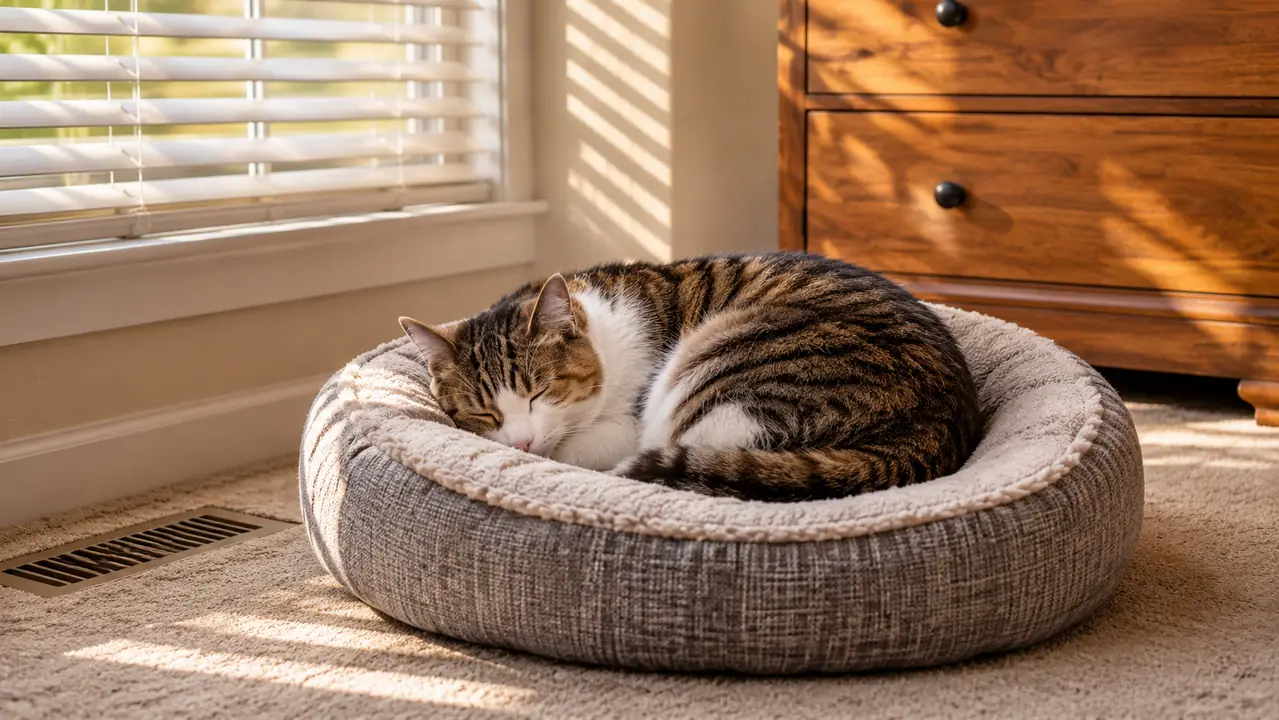
Pepper is nine years old, a gray tabby who weighs about eleven pounds, and she has gotten stiff in the hips over the past year. She does not jump to the top of anything anymore. What she wants is a warm, low place to sleep, and for most of last winter that place was a folded blanket on the bedroom carpet near the heat vent. When I finally brought home a Bedsure calming donut bed in the 20 inch size, she walked a wide circle around it, sat down four feet away, and stared at me as though I had rearranged her furniture without asking.
If you have an older cat, you have probably been through a version of this. You buy the bed, you set it down, and the cat acts as if a stranger has moved into the room. The bed is almost never the problem. The setup is the problem: the spot you chose, the height of the rim, the smell of something new, and how much we fuss over the whole business. Here is what worked with Pepper, in the order I would do it again if I had to start over.
Pepper Ignored It for Four Days. Then She Quit Using the Blanket.
Round, twenty inches across, machine washable as one piece, and low enough that an older cat can step in rather than climb in. If your cat already sleeps in one warm corner of one room, this is the shape that fits that corner.
Amazon Check Today's Price on Amazon →Step 1: Put the Bed Where She Already Sleeps
Cats do not care where a bed looks good. They care about warmth, quiet, and a clear view of the door. Before you move a stick of furniture, watch your cat for two days and notice where she already naps. For Pepper that was the bedroom carpet, six inches from the heat vent, with her back against the baseboard. That is exactly where the bed went. Not the living room, where I thought it would look nicer next to the sofa.
The footprint matters more than the product photo suggests. This bed is twenty inches across and six inches tall at the rim, and it weighs a little over two pounds, so it slides around easily until it settles into the carpet. In a small bedroom, twenty inches is real floor space. Measure the spot before you order, especially if your cat sleeps wedged between a dresser and a wall the way Pepper does.
Think about the floor, too. My bedrooms are carpet and the living room and kitchen are laminate. A round bed on laminate skates when a cat launches out of it, so the bedroom carpet is the better home for this one. The bottom has a non skid surface, which genuinely helps, but it helps on carpet far more than it does on a slick floor. If your only warm spot is a hard floor, put a cheap rug under the bed and call it done.
Step 2: Set It Down and Then Leave It Alone
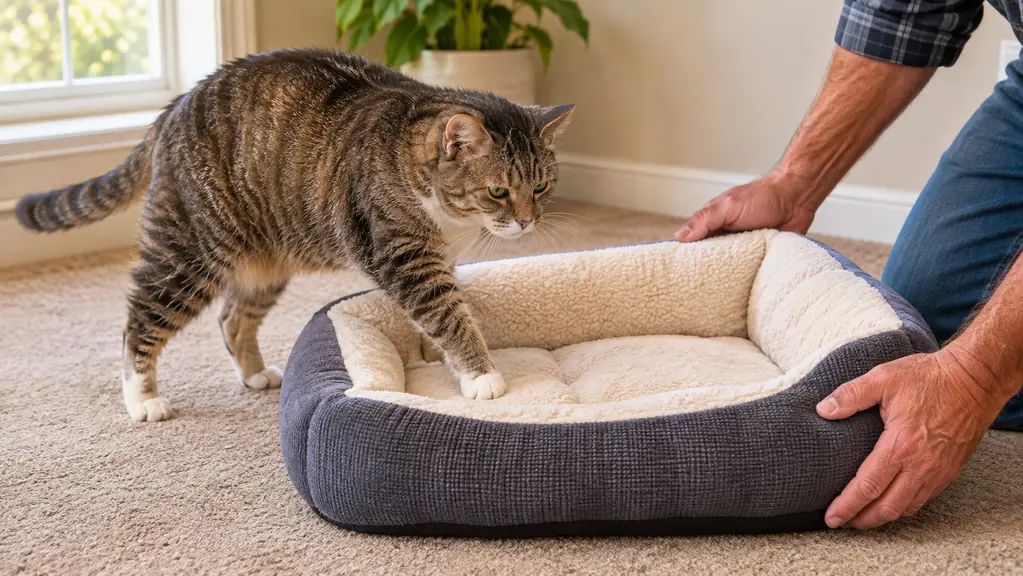
This is the step where most people lose the argument. They set the bed down, the cat walks past it, so they pick it up and try another room. Then they put the cat in it. Then they move it again. Every move restarts the clock. Set it down once, in the spot you picked, and then behave as though it is not there. Do not pat it. Do not lift the cat and place her in it. That reads as a trap.
Pepper took four days. Day one she sniffed the rim and left the room. Day two she sat next to it and considered it. Day three she put one front paw in and took it back out, three times. Day four she was asleep in the middle of it, and she has barely used the blanket since. Four days is not a long time for a nine year old cat, and it is worth waiting out without interference.
Moose, who is four, sixteen pounds, and built like a small loaf of bread, tested the bed on day two by walking straight over the top of it. It held its shape and he moved on. The Bedsure listing puts the maximum weight recommendation at 25 kilograms, so a sixteen pound cat is not going to flatten it, though a determined one can certainly leave an indent. If two cats both want the same warm corner, buy a second bed rather than referee.
Step 3: Lower the Step-Over for a Stiff Cat
Six inches does not sound like much until you watch a cat with stiff hips try to get over it. Pepper approaches a bed slowly now. She plants a front paw, then pulls the back half in after her. A tall rim turns that into a project. The donut shape has a raised rim, and that rim is exactly what makes the bed feel secure, so I did not want to flatten it. I just made the approach easier.
Three small things helped. I set the bed so one side is against the baseboard, which gives her something solid to brace against while she steps in. I kept it on carpet instead of laminate, for grip. And I moved it out of the traffic path between the door and the closet, because a stiff cat does not want to be stepped over while she is getting into bed. None of that cost anything, and all of it changed how fast she settled.
If your cat is stiffer than Pepper, or if you are lifting her into a bed, that is a conversation with your vet before it is a conversation about bedding. A soft bed is comfort, not treatment. This one is a donut with microfiber fill and a faux fur cover. It is not an orthopedic bed and I would not call it one. It is soft, it is warm, it holds its shape, and for an older cat who wants to curl up, that is most of the job.
Pepper took four days to get in it. Ten months and about fifteen washes later, she is asleep in it before I have had my coffee, and not one seam has let go.
Step 4: Give It Your Cat's Own Smell Before You Give It Anything Else
A new bed smells like a warehouse and a plastic bag. Your cat smells that and correctly decides the thing is not hers yet. Do not spray it with anything. Do not wash it before the first use. Do not add catnip if your cat is indifferent to catnip, which Pepper is. Just give her something that already smells like her and let the two smells sort themselves out.
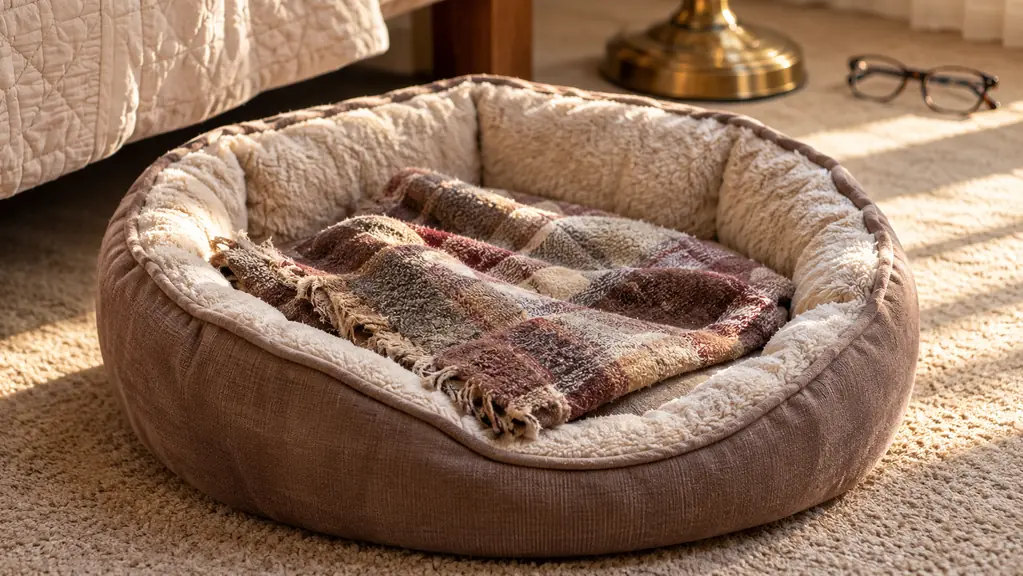
I put the folded blanket she had been sleeping on inside the donut for three days, then took the blanket away. That was the whole trick. Rubbing the bed down with a towel the cat has slept on does the same job. The point is that the bed stops being a strange object in the room and becomes part of the cat's own territory, which is a distinction cats take seriously and most of us do not.
There is a wrinkle here if you have more than one cat. Moose is the confident one, and a warm new bed in a quiet room is exactly the kind of thing a confident cat claims for himself. I left the bedroom door open so Pepper has a clear exit and can get in without being cornered. If the younger cat in your house is a bed thief, give the older one a second route out and a second warm spot to fall back on.
Step 5: Wash It Right So It Keeps Its Shape
A bed you cannot wash is not a bed, it is a smell with a cover on it. This Bedsure bed goes into the machine whole, cover and fill together, which is why I chose it over the ones with a removable cover and a foam core. Faux fur collects cat hair the way a lint brush does, and ten months in I have washed it roughly every three weeks whether it looks like it needs it or not.
Two rules. Use a mild detergent with no scent and skip the fabric softener, because you want the bed to come out smelling like nothing rather than like a garden. And dry it on low, or let it air dry. Microfiber fill clumps when it gets too hot, and once it clumps the donut goes lumpy in a way that fluffing will not fix. I have made that mistake with a pillow and I did not care to repeat it.
The bed has held up. Fifteen washes or so, seams included, and it still sits flat with the rim standing up the way it did in the first week. At two pounds it is light enough to carry to the laundry room one handed and to shake out over the back step, which sounds like nothing until you have hauled a heavier bed across a house. The filling has not shifted to one side, and that was the failure I expected first.
What Else Helps
A bed is one piece of a setup, and the other pieces are just as plain. Warmth comes first. Pepper's bed sits near the heat vent because that is where she was sleeping anyway, blanket or no blanket. If your house runs cold, or your cat is thin or old, a bed near a warm floor vent does more than any gadget you can buy. Do not put it in the draft of a door or on cold tile and then wonder why the cat prefers the sofa.
Low places come second. Pepper gave up the top of the cat tree a while ago. She uses the lowest platform, she uses the window perch when the afternoon sun is on it, and she spends the rest of her day in the bed. That is a reasonable life for a nine year old cat, and I stopped trying to talk her out of it. If your cat has quit jumping, move the high perches out of the way so she is not tempted into a jump she will regret the next morning.
Third, keep the boring things close. Food, water, and the litter box should not be a long walk across a cold floor for an older cat. Ours is in the laundry room and both cats use it fine, and I have been thinking about a second box in the bedroom now that Pepper is slower than she was. That is a job for this winter. Start with the bed and the warm spot, then look honestly at what your cat has to cross to get to everything else.
Last, keep her claws trimmed. A cat who is stiff in the hips still uses her claws to pull herself up onto things, and long claws catch in faux fur when she is turning around in a bed. Pepper gets a trim every few weeks and it has made a difference to how easily she settles. If you cannot manage it yourself, most groomers will do a cat's nails for a small charge and no appointment.
If She Already Sleeps in One Warm Corner, This Fits That Corner
Twenty inches round, machine washable as one piece, low enough for an older cat to step into, and soft enough that a stiff cat curls up instead of stretching out. Ten months in this house, and it outlasted the blanket.
Amazon Check Today's Price on Amazon →